Culture
Japan's seasons in words: hanami, tsuyu, momiji and more
The Japanese words for the four seasons, and the seasonal customs and words everyone in Japan knows, from cherry blossom viewing to autumn leaves.
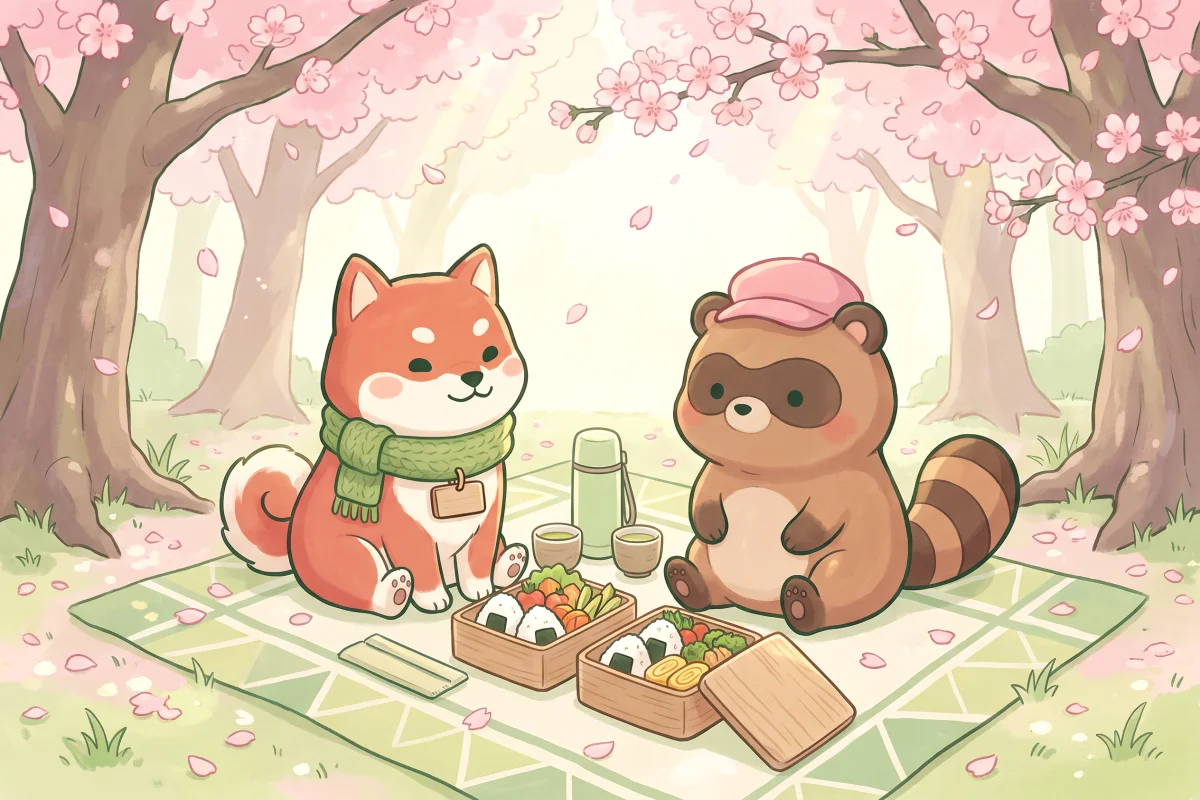
In Japan, the seasons are everywhere: in food, sweets, festivals, decorations, greetings and even letters, which often open with a line about the weather. Learning the seasonal words is a lovely way into both the language and the culture.
The four seasons
To say "in spring", add に (or は): はるに さくらが さきます (cherry blossoms bloom in spring); はるは あたたかいです (spring is warm). "My favourite season" is いちばん すきな きせつ.
Spring: cherry blossoms
Hanami means "flower viewing", and in spring it means one thing: picnics under the cherry trees with friends, family or colleagues. TV weather reports track the "cherry blossom front" as it moves north, and the blossoms last only about a week or so at their best. That short life is part of their beauty.
Spring is also the start of the school and working year: both begin in April.
Early summer: the rainy season
In most of Japan, early summer brings tsuyu, several weeks of rainy, humid weather. Its flower is the hydrangea, which blooms in temple gardens across the country.
Summer: festivals and fireworks
Summer is festival season: food stalls, games, dancing and big fireworks displays, often with people wearing light cotton yukata. To cope with the heat there are wind chimes, shaved ice (kakigōri) and cold noodles.
Autumn: red leaves
In autumn, people travel to see the maple leaves turn red and gold, just as they do for cherry blossoms in spring. Autumn is also famous for food: chestnuts, sweet potatoes, new rice and mushrooms.
Winter: snow and the new year
New Year is the biggest holiday of the year: families gather, eat special food, and visit a shrine or temple in the first days of January. Winter also means hot springs (onsen), hot pots and, in the north, deep snow.
Learn the seasons and the weather in Japanese in Hitokuchi's "Four seasons" and "The weather" lessons, with audio for every word.
Keep reading
 MatchaThe Japanese tea ceremony: a simple guide for guestsWhat happens at a Japanese tea ceremony, how to receive and drink a bowl of matcha, and the few phrases a guest says, explained simply for first-timers.
 BasicsTelling the time in Japanese, plus days and datesHow to say the time, the days of the week and dates in Japanese, including the irregular readings everyone has to learn.
 BasicsJapanese greetings for every time of dayHow to say hello, good morning, goodnight and goodbye in Japanese, when to use each one, and the everyday set phrases Japanese people say at home and work.