Travel
Konbini Japanese: phrases for Japan's convenience stores
What staff say at a Japanese convenience store, how to answer, and the phrases you need for heating food, bags, chopsticks and paying.
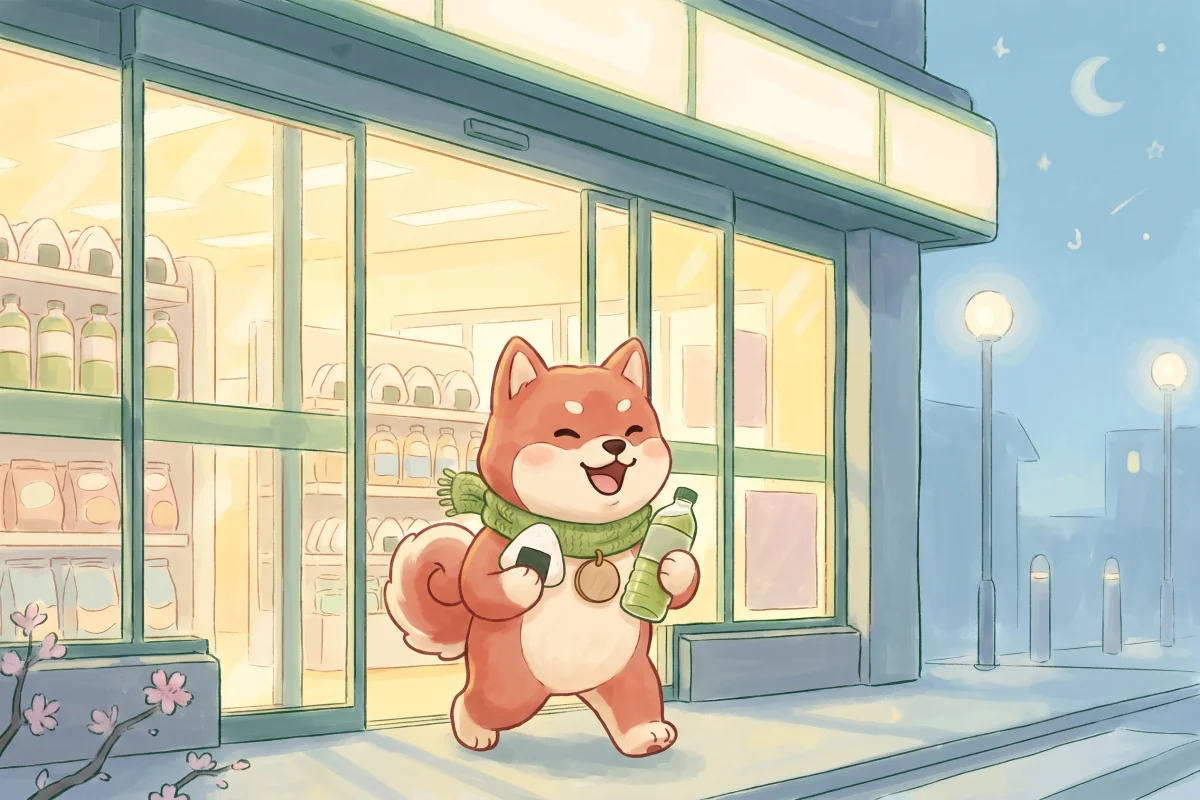
Japan's convenience stores, コンビニ (konbini), are a highlight of any trip: open around the clock in most places, and full of rice balls, hot snacks, sandwiches, coffee and much more. You can also top up a travel card, pay bills, print documents and buy event tickets.
The staff speak fast and politely, but they say the same few phrases again and again. Learn them and every konbini visit becomes easy.
When you walk in
You'll hear いらっしゃいませ (irasshaimase, "welcome"). You don't need to reply. No one expects you to; a nod is plenty.
What staff will ask at the till
These are the questions you'll hear most, and an easy answer to each:
Staff use very polite customer-service Japanese (keigo), so the questions sound more complicated than the answers need to be.
Bags aren't free in Japan: they cost a few yen each. If you say yes to a bag, it'll be added to your total.
Asking for things
Paying
Most konbini take cash, cards, IC travel cards and phone payments. Watch the screen at the till: you may be asked to tap the button for your payment method yourself.
Leave cash in the little tray on the counter rather than handing it over; your change comes back the same way. And as you leave, staff will say ありがとうございました. A small nod back is perfect.
What to try
- おにぎり (onigiri): rice balls, wrapped so the seaweed stays crisp. Follow the numbered tabs on the wrapper to open it.
- からあげ (karaage): Japanese fried chicken, kept hot by the till.
- おでん (oden): a winter favourite, simmered in broth near the counter.
- Seasonal sweets, and of course, matcha everything.
Hitokuchi's shopping lessons teach prices, "this one, please" and what staff say, with audio for every phrase.
Keep reading
 Travel25 Japanese phrases for your first trip to JapanThe Japanese phrases that actually get used on a trip to Japan, for shops, restaurants, trains and getting help, with romaji and what people will say back.
 TravelHow to order food in Japanese at a restaurantEvery step of eating out in Japan, in Japanese: getting a table, ordering, asking about the menu, saying thank you and paying the bill.
 BasicsHow to count in Japanese: numbers and counters made simpleLearn Japanese numbers from 1 to 10,000, why some numbers have two readings, and the handful of counters you need for things, people and drinks.