Travel
How to order food in Japanese at a restaurant
Every step of eating out in Japan, in Japanese: getting a table, ordering, asking about the menu, saying thank you and paying the bill.
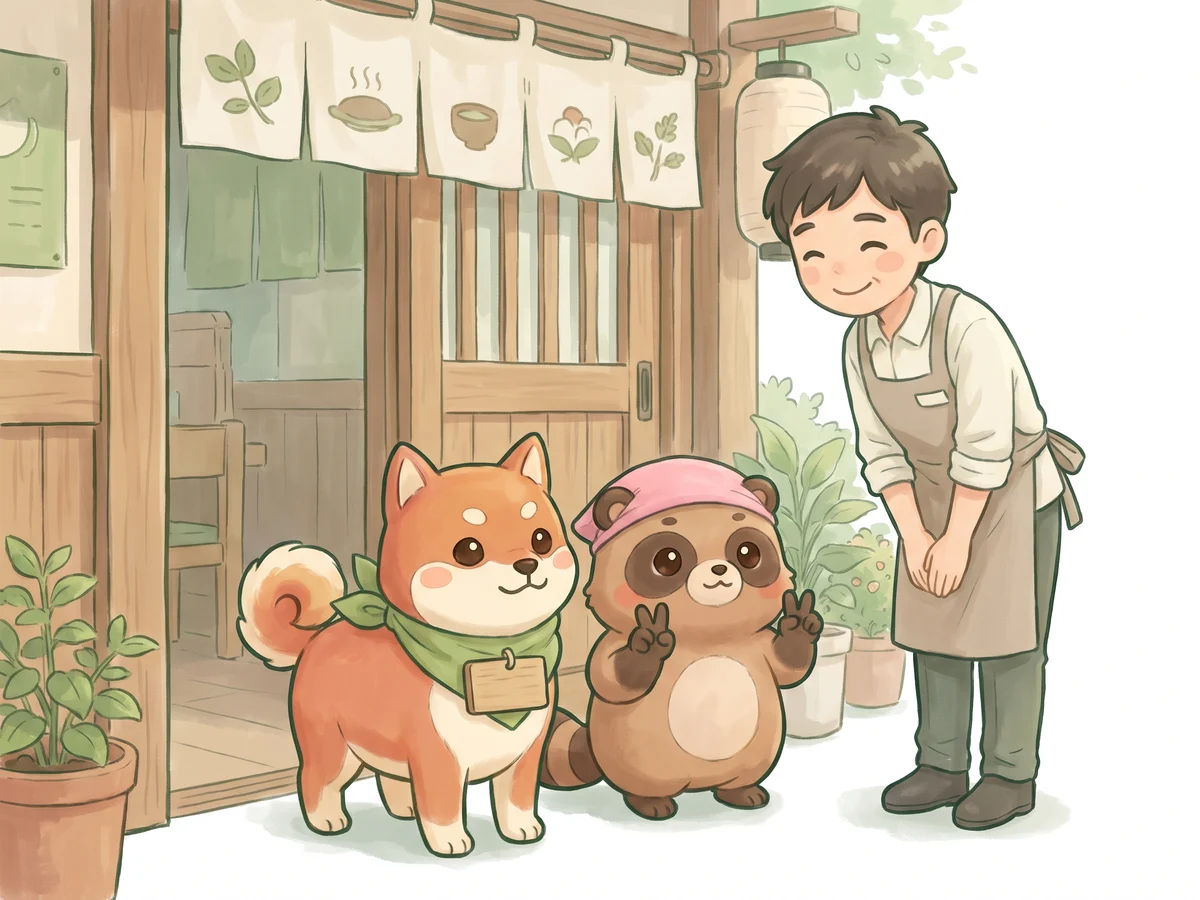
Eating out is one of the best parts of being in Japan, and a little Japanese goes a long way. Here's the whole visit, from the door to the bill, with what staff will say and what you can say back.
1. Arriving
Staff will greet you with いらっしゃいませ and ask how many are in your group:
Holding up fingers works too. If there's a wait, you may be asked to write your name on a list by the door.
2. Getting the menu
Many restaurants show plastic food models or pictures, so pointing is perfectly normal. Some places have you order from a tablet on the table or buy a ticket from a machine at the entrance. Ramen shops often do this.
3. Calling staff and ordering
Japanese restaurants don't usually come to check on you. When you're ready, catch someone's eye and say すみません! (sumimasen, "excuse me!"). That's normal and polite. Some tables have a call button instead.
Water or green tea often comes free and is refilled without asking.
4. Special requests
If you have a serious allergy, carry a card that explains it in Japanese, as menus may not list every ingredient.
5. Eating
Before you start, put your hands together and say いただきます. It's a thank-you for the food and everyone who made it.
A few manners worth knowing:
- Don't stick your chopsticks upright in a bowl of rice, and don't pass food from chopsticks to chopsticks. Both are linked to funerals.
- Slurping noodles is fine, even appreciated.
- Lifting a small bowl to your mouth for rice or miso soup is normal.
6. Paying
You'll often pay at the till by the door rather than at your table. Bring the bill with you. There's no tipping in Japan; leaving money on the table may send staff running after you to give it back.
As you leave, say ごちそうさまでした (gochisōsama deshita, "thank you for the meal"). It always gets a smile.
Hitokuchi's restaurant lessons walk you through a whole meal in Japanese, from getting a table to paying the bill.
Keep reading
 Travel25 Japanese phrases for your first trip to JapanThe Japanese phrases that actually get used on a trip to Japan, for shops, restaurants, trains and getting help, with romaji and what people will say back.
 TravelKonbini Japanese: phrases for Japan's convenience storesWhat staff say at a Japanese convenience store, how to answer, and the phrases you need for heating food, bags, chopsticks and paying.
 BasicsHow to count in Japanese: numbers and counters made simpleLearn Japanese numbers from 1 to 10,000, why some numbers have two readings, and the handful of counters you need for things, people and drinks.