Grammar
Polite vs casual Japanese: です/ます and when to drop them
Japanese changes depending on who you're talking to. Here's how polite です/ます forms work, what casual Japanese looks like, and which to use when.
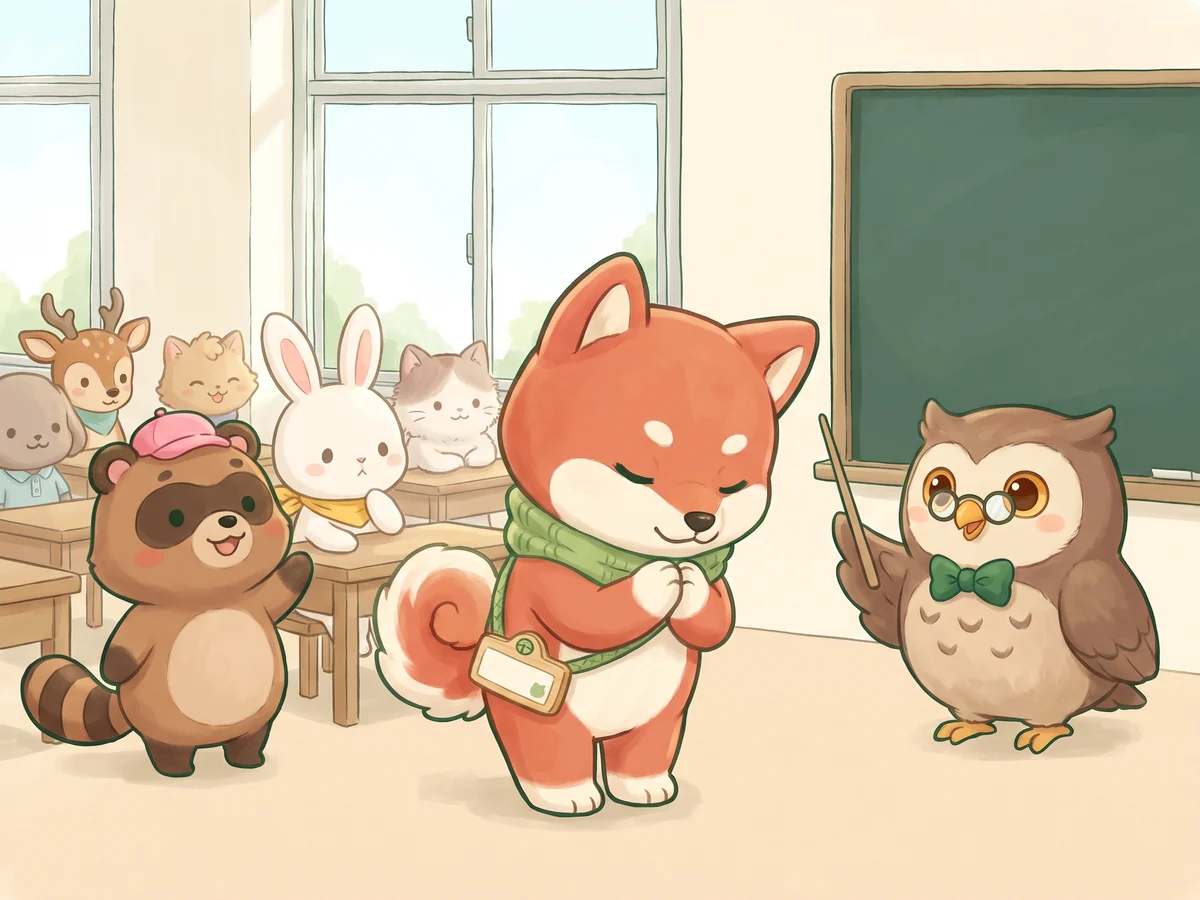
In English, you might say "Would you like a coffee?" to a guest and "Coffee?" to your flatmate. Japanese does the same thing, but more systematically: the endings of verbs and adjectives change depending on how polite you're being.
For learners, there are two styles to know first: polite (です/ます) and casual (plain).
Polite Japanese: です and ます
The polite style is what you'll learn first, and it's the right choice with almost everyone you don't know well: shop staff, teachers, colleagues, people older than you, and strangers.
- Nouns and adjectives end in です (desu): がくせいです, しずかです, おいしいです.
- Verbs end in ます (masu).
The pattern is very regular: 〜ます (do), 〜ません (don't), 〜ました (did), 〜ませんでした (didn't), 〜ましょう (let's).
Casual Japanese: the plain form
With close friends, family, and people younger than you (once you know them), Japanese drops です and ます and uses the plain form, the same form you find in dictionaries.
| Polite | Casual | Meaning |
|---|---|---|
| 学生です | 学生だ / 学生 | (I'm) a student |
| 行きます | 行く | (I'll) go |
| 行きません | 行かない | (I) won't go |
| 行きました | 行った | (I) went |
| おいしいです | おいしい | (It's) tasty |
In real conversation, casual speech also drops a lot: だ often disappears, questions end with a rising tone instead of か, and little particles like ね and よ do a lot of work.
Which one should you use?
When in doubt, use polite. Being a little too polite is rarely a problem; being too casual with the wrong person can be. As a learner, polite Japanese is your safe default for almost every situation.
Switch to casual when:
- You're talking with close friends your own age or younger.
- You're talking to children or pets.
- Someone you know well starts speaking casually to you. Following their lead is natural.
And beyond: keigo
There's also a more formal level, 敬語 (keigo), with special respectful and humble verbs used in business and customer service. You'll hear it in shops and on trains (いらっしゃいませ, おまちください), but you don't need to speak it as a beginner. Polite です/ます is perfectly respectful.
Hitokuchi's "Talking with friends" lesson shows the same conversations in polite and casual Japanese, side by side.
Keep reading
 Cultureさん, くん, ちゃん, さま: Japanese name endings explainedWhat the Japanese honorifics san, kun, chan, sama and sensei mean, who uses them for whom, and the one name you never add them to.
 Grammarは vs が: the simple explanationThe difference between the Japanese particles は (wa) and が (ga), explained simply, with the four rules that cover most beginner sentences.
 GrammarThe Japanese て-form explained, with an easy way to remember itThe て-form is one of the most useful verb forms in Japanese. Here's what it does, how to make it from any verb, and a simple way to remember the rules.