Basics
How to introduce yourself in Japanese (jikoshōkai)
A simple Japanese self-introduction you can learn today, line by line, with your name, where you're from, what you do and the polite phrases that start and end it.
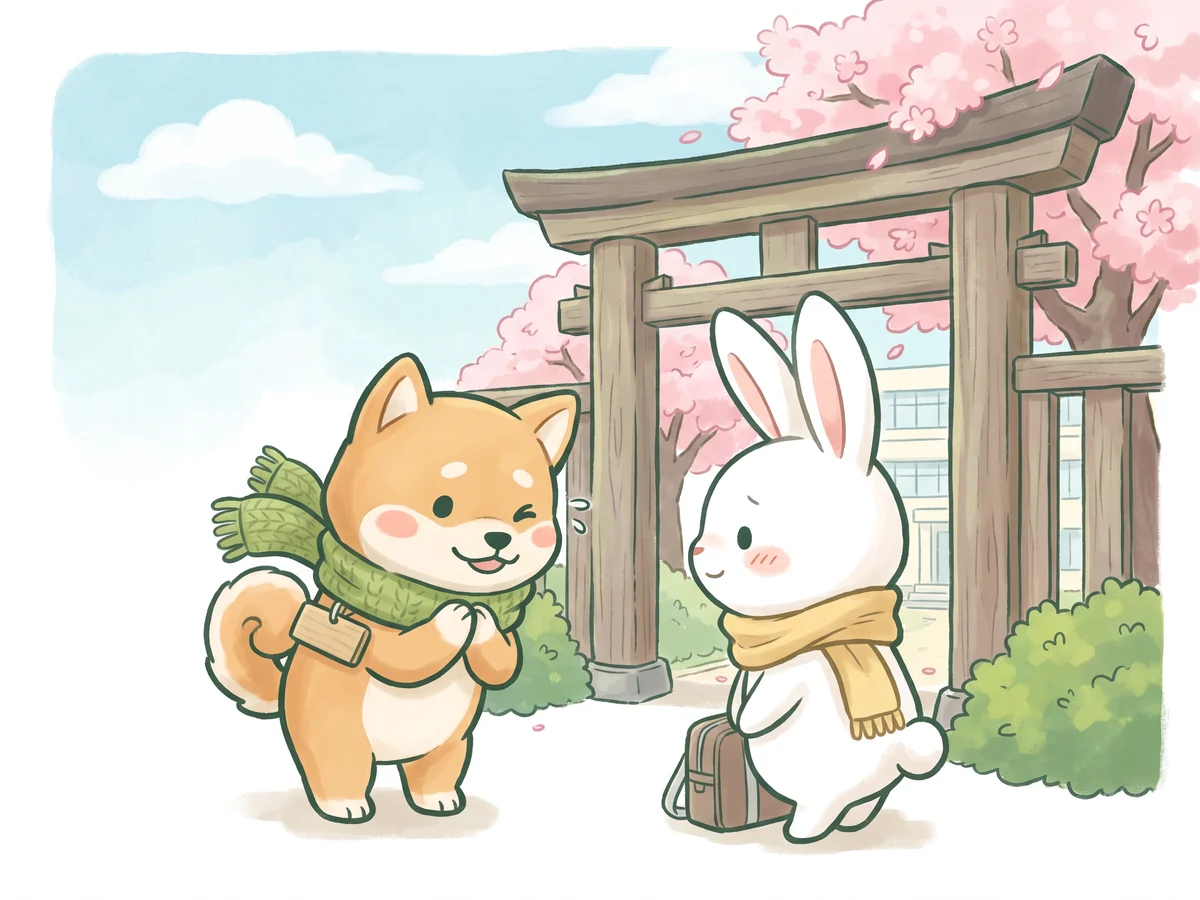
A self-introduction, 自己紹介 (jikoshōkai), is something you'll do again and again in Japan: in class, at work, at a language exchange. It follows a simple, polite pattern, and once you've learned it you can use it almost anywhere.
The basic introduction
Here's a complete, natural self-introduction:
That's it: four lines, and a small bow at the start and end. Let's look at each line.
Line by line
はじめまして: "nice to meet you"
はじめまして literally means "for the first time". Say it only when you meet someone new, with a small bow.
〜です: "I'm…"
Say your name and add です (desu, "am / is"). Non-Japanese names are written in katakana: ソフィー (Sofī), トム (Tomu). Japanese people usually give their family name first.
You can also say 〜と もうします (to mōshimasu, "my name is…"), which is more humble and very polite. It's good for job interviews and formal events.
〜から 来ました: "I'm from…"
から means "from", and 来ました (kimashita) means "came". Swap in your country or city:
You can also say 〜じんです (-jin desu): イギリス人です (Igirisu-jin desu, "I'm British").
よろしく おねがいします: the polite finish
よろしく おねがいします is hard to translate. It's roughly "I'm in your hands" or "please treat me kindly", and it closes almost every introduction. Bow as you say it. Between friends, just よろしく is fine.
Add a little more
Want to say a bit more? Add one or two of these after your name:
In Japanese, you don't need to say "I" (わたしは) in every sentence. When it's clear you're talking about yourself, leave it out. It sounds more natural.
What you might hear back
The other person will usually reply with their own introduction and finish with こちらこそ、よろしく おねがいします (kochira koso, yoroshiku onegaishimasu): "likewise, nice to meet you".
Hitokuchi's "Nice to meet you" lesson walks you through a full self-introduction, with audio for every line.
Keep reading
 BasicsJapanese greetings for every time of dayHow to say hello, good morning, goodnight and goodbye in Japanese, when to use each one, and the everyday set phrases Japanese people say at home and work.
 Cultureさん, くん, ちゃん, さま: Japanese name endings explainedWhat the Japanese honorifics san, kun, chan, sama and sensei mean, who uses them for whom, and the one name you never add them to.
 GrammarPolite vs casual Japanese: です/ます and when to drop themJapanese changes depending on who you're talking to. Here's how polite です/ます forms work, what casual Japanese looks like, and which to use when.